The Hulu Squatters Series Is a Wake-Up Call for Every NY Landlord | Integrity Core Realty
The Hulu Squatters Series Is a Wake-Up Call for Every New York and Long Island Landlord
When a Queens homeowner gets arrested trying to enter her own home, and a family gets sued $400,000 by a squatter serving prison time, it stops being entertainment. It becomes a warning.
When Kelly Ripa says a television project left her shaking with rage, you pay attention. The Emmy-winning host and her husband Mark Consuelos executive produced a new Hulu docuseries that premiered June 4, 2026, and the reaction has been exactly what you'd expect when mainstream America finally gets a front-row seat to something property owners have been living quietly for years.
The show is called Squatters: Get the F*** Out of My House. It is six episodes. It is real. And if you own rental property anywhere in New York, New Jersey, or Long Island, at least three of those episodes should feel uncomfortably close to home.
Squatters: Get the F*** Out of My House
A six-part docuseries executive produced by Kelly Ripa and Mark Consuelos, produced by Milojo and ABC News Studios. The series follows real families across the country forced into shocking legal battles against occupants exploiting legal loopholes to live rent-free in homes they do not own. Cases span Queens, New Jersey, Malibu, and Los Angeles.
Watch on Hulu →Six Episodes. Six Families. Six Reasons to Pay Attention.
The show doesn't dramatize. It doesn't need to. Each episode is drawn from real cases that unfolded exactly as documented, in courtrooms and living rooms and on front porches where homeowners stood outside their own properties, unable to enter, while someone else lived inside.
Arrested in Your Own Driveway
A Queens homeowner attempts to enter a property she owns and is arrested in the process. The person inside stays. She does not.
Queens, New YorkThe Serial Squatter
A calculated operator uses legal loopholes to move systematically between luxury properties, exploiting the same gaps in the law repeatedly across multiple homes.
Malibu, CaliforniaA Deceased Relative's Home Taken Over
A family attempts to reclaim a property belonging to a deceased relative while battling an occupant who refuses to leave and uses every available legal mechanism to delay removal.
UndisclosedA Con Artist and a Missing Millionaire's Estate
A valuable Los Angeles estate becomes the target of a con artist who moves in, takes over, and begins treating the property as their own while the case drags through the courts.
Los Angeles, CaliforniaThe Homeowner Who Pushed Back
One homeowner decides to fight, publicly and aggressively, and discovers that pushing back against a squatter situation comes with its own set of serious consequences.
UndisclosedNew Jersey: When It Escalates to SWAT
A New Jersey property dispute escalates beyond anything the homeowner anticipated, ultimately requiring a law enforcement response that made national headlines.
New JerseyThe Detail That Should Alarm Every New York Property Owner
The Queens episode deserves particular attention from anyone who owns property in New York. A homeowner, in Queens, was arrested for attempting to enter a property she owns. Not for breaking in. Not for damaging anything. For trying to go home.
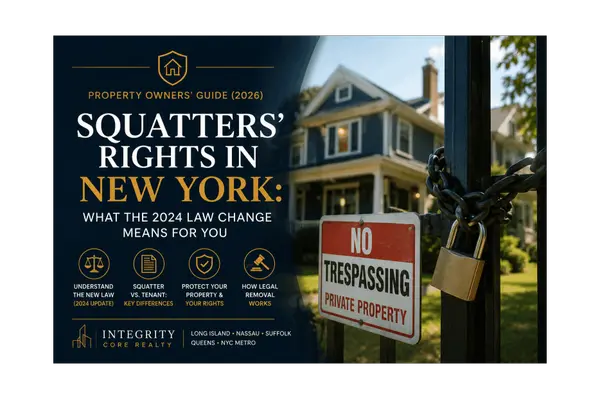
This is not a glitch in the system. It is the system working exactly as it was designed in New York. Once someone has occupied a property for 30 days or more, they acquire legal occupant status under New York law. Removing them without a court order, even if they are trespassers with no lease and no right to be there, can expose the property owner to civil liability and in some cases criminal charges.
The family sued for $400,000 adds another dimension. The squatter filing that lawsuit was serving a prison sentence at the time. They had no right to the property. They were incarcerated. And they filed a $400,000 lawsuit. In New York, that is legally possible. New York's tenant and occupant protection framework does not require a clean record, a lease, or even physical presence to initiate legal action against a property owner.
"Kelly Ripa said the show left her shaking from rage. She's not a landlord. Imagine how the people actually living through these cases feel."
This Isn't New, It's Just Finally on Television
Property owners across New York have been navigating versions of these situations for years. What the Hulu docuseries has done, and why it matters for the broader conversation, is bring these cases out of housing court records and into living rooms.
The New Jersey SWAT episode resonates particularly for landlords in the tri-state area. New Jersey's tenant protection laws have followed New York's trajectory closely, and what unfolds in Newark or Jersey City today often predicts what unfolds in Nassau County tomorrow.
We wrote recently about a Brooklyn landlord who has spent nearly a decade in housing court over a single tenancy dispute, with unpaid rent now estimated between $275,000 and $325,000. That case, reported by Fox News, drew massive attention. The Hulu series puts six more faces on the same underlying problem.
What Landlords Can Learn From Each Episode
Never attempt a self-help eviction in New York or New Jersey
The Queens arrest is the clearest illustration of this lesson. Changing locks, removing belongings, shutting off utilities, or physically attempting to remove an occupant without a court order are all illegal in New York, regardless of whether the occupant has any legitimate right to be there. The property owner can end up on the wrong side of a criminal charge while the occupant remains inside. Always go through the courts.
Documentation from day one is non-negotiable
Several cases in the docuseries turned on disputed facts about how an occupancy began, who gave permission, and what was agreed to. In New York's housing courts, oral agreements, informal arrangements, and undocumented permissions can all become weapons used against a property owner. Every occupant, every arrangement, every permission granted should be in writing from the first day.
Act immediately, the 30-day clock matters
Under New York law, once someone has been in continuous occupation for approximately 30 days, they acquire legal occupant status and must be removed through formal eviction proceedings. The moment you become aware of an unauthorized occupant in a property you own, the clock is running. Every day of inaction makes the legal and financial situation more complicated.
Estate and probate properties are especially vulnerable
The deceased relative episode and the missing millionaire's estate case both highlight a specific vulnerability, properties that are vacant or in transition during an estate or probate process are prime targets. An empty property with no regular monitoring, particularly one going through a slow probate process, can be occupied without detection. If you are managing a Long Island estate sale, regular property checks and prompt legal action are critical.
Fighting back publicly has consequences
The Patti Peeples episode is a cautionary note for landlords who are tempted to publicize their situations on social media or in the press. While public attention can sometimes accelerate legal proceedings, it can also escalate the conflict, motivate the occupant's legal team to fight harder, and introduce new legal vulnerabilities. Consult your attorney before taking any public action.
Know your exit options before you need them
The most consistent theme across the docuseries is how many of these situations became catastrophic because property owners had no plan. They had never thought through what they would do if an occupancy dispute arose, what their legal options were, or what the financial cost of a prolonged court battle would mean for their equity position. The time to evaluate your exit strategy is before a problem exists, not after.
The Bigger Picture for Long Island Landlords
The Hulu docuseries covers cases in Queens, New Jersey, California, and across the country. But the legal dynamics it illustrates are not unique to those locations. Long Island's regulatory environment is moving steadily in the same direction.
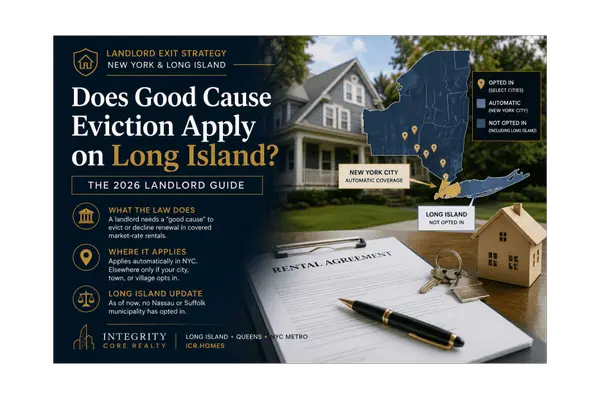
Good Cause Eviction protections have expanded across Nassau County municipalities. Tenant advocacy resources that were once concentrated in New York City are increasingly accessible on Long Island. Housing court timelines, even in less backlogged Long Island courts, can still consume months or years when disputes are contested.
At the same time, Long Island home values have risen more than 50% since 2020. Many landlords who purchased rental properties five, ten, or fifteen years ago are sitting on equity positions that would have seemed impossible at the time of purchase. The financial case for continuing to hold a rental property in this legal environment, particularly one with any tenant complications, deserves serious evaluation.
The families in the Hulu docuseries did not plan to spend years in court. They did not plan to spend tens or hundreds of thousands of dollars in legal fees and lost rent. And most of them did not have a clear picture of their options until they were already deep inside a situation they couldn't easily exit.
That's the real lesson of the show. Not that squatters are everywhere, but that the legal framework that allows these situations to persist is real, it is expanding, and it rewards property owners who understand their options and make decisions proactively rather than reactively.
Frequently Asked Questions
What rights do squatters have in New York?
New York has some of the strongest occupant protections in the country. Once someone has occupied a property for 30 days or more, they may be considered a legal occupant and cannot be removed without formal court eviction proceedings, even if they have no lease and are not paying rent. Removing someone without a court order can expose the property owner to civil liability and potentially criminal charges.
Can a squatter sue a homeowner in New York?
Yes. If a property owner attempts to remove an occupant without following proper legal procedures, that occupant can sue for illegal eviction or harassment. As shown in the Hulu docuseries, one family was sued for $400,000 by a squatter who was simultaneously serving a prison sentence. New York's protections mean even unauthorized occupants retain certain legal rights that must be respected throughout the removal process.
How do you legally remove a squatter in New York?
The only legal path in New York is through the court system. You must file a petition in housing court, serve proper legal notice, attend hearings, and obtain a judgment for possession before a marshal or sheriff can execute a lawful removal. Self-help tactics including changing locks, removing belongings, or shutting off utilities are illegal under New York law regardless of whether the occupant has any legitimate claim.
What is the difference between a squatter and a tenant in New York?
The distinction can become surprisingly blurry. A squatter occupies a property without permission and without a lease. However, once in continuous occupancy for a period of time, New York courts may treat them similarly to a holdover tenant, requiring full eviction proceedings. In some cases, long-term occupants can even make adverse possession claims that could theoretically give them legal ownership rights after many years.
Should a Long Island landlord consider selling if worried about squatter or tenant situations?
For many Long Island landlords, the increasing complexity of tenant and occupant protection laws, combined with record home value appreciation over the past five years, has made this question worth asking seriously. A consultation with an experienced landlord exit specialist can help evaluate whether the current legal environment makes selling the right strategic decision given your specific equity position and property situation.
Integrity Core Realty · Landlord Exit Specialist
Know Your Options Before the Show Becomes Your Reality
We work with landlords across Long Island, Queens, Nassau County, and the NYC metro to evaluate exit strategies, understand current market value, and make informed decisions before situations become expensive ones.
How Integrity Core Realty Can Help You
Disclaimer: This article references the Hulu docuseries "Squatters: Get the F*** Out of My House" (2026), executive produced by Kelly Ripa and Mark Consuelos, produced by Milojo and ABC News Studios. Episode descriptions are based on publicly available press materials and do not reproduce proprietary content from the series. This article is for general informational purposes only and does not constitute legal advice. New York and New Jersey squatter, tenant, and occupant protection laws vary by municipality and change frequently. Always consult a licensed attorney before taking any action regarding a property occupancy dispute. Integrity Core Realty is a licensed real estate brokerage, not a law firm.
Categories
- All Blogs (63)
- Affordability (3)
- Buying Tips (9)
- Divorce & Real Estate (7)
- Downsizing & Senior Moves (3)
- Equity (3)
- Expired/Withdrawn/Canceled (1)
- Fairhaven Real Estate Stories (3)
- First-Time Buyers (8)
- For Buyers (32)
- For Sellers (21)
- Forecasts (3)
- Home Prices (3)
- Infographics (1)
- Mortgage Rates (2)
- NY/LI Landlord Resources (8)
- Pre-Foreclosure Options (2)
- Probate & Estate Home Sales (5)
- Rent vs. Buy (3)
- ⚖️ For Attorneys (4)
- 🏡 Featured Listings (20)
- 📍 Local Living (23)
- 📅 Open Houses & Events (3)
- 📊 Real Estate Insights (7)
Recent Posts