A 10-Year Tenant Nightmare: What Every NY Landlord Must Know | Integrity Core Realty
A 10-Year Tenant Nightmare: What Every Landlord in Brooklyn, Queens, and Long Island Must Know
One Brooklyn landlord's story just made national news. If you own rental property anywhere in New York, it should make you think carefully about where you stand, and what your options are.
It started with a Craigslist ad for a live-in companion for an elderly tenant. It turned into almost a decade in court, hundreds of thousands of dollars in unpaid rent, a drained college fund, and a landlord who describes his experience as a "Twilight Zone marathon", with no end yet in sight.
This isn't a horror story from some obscure corner of the legal system. It made national news on Fox News in June 2026. And the reason it resonates so deeply with landlords across New York is simple: what happened in Brooklyn could happen in Queens. It could happen in Nassau County. It could happen anywhere in New York where the legal balance between landlord rights and tenant protections has fundamentally shifted over the past decade.
This article is not about taking sides in a legal dispute. It's about what the case illustrates, and what every New York rental property owner needs to understand before they need to understand it.
A Brooklyn landlord who owns an eight-unit building in Park Slope has spent nearly a decade in court attempting to resolve a tenancy dispute that began when a live-in companion moved into one of his apartments in 2014. Following the death of the original tenant in 2016, the case evolved into a complex legal battle involving rent stabilization claims, disputed lease history, and repeated court adjournments. The landlord estimates total unpaid rent now ranges between $275,000 and $325,000. The case was adjourned again in April 2026, ensuring the saga will extend into its tenth year.
This Isn't Just a Brooklyn Story
Park Slope is a long way from Great Neck or Syosset. But the legal framework that allowed this situation to unfold over nearly a decade doesn't stop at the Kings County line.
Queens landlords operate under the same housing courts, the same rent stabilization laws, and increasingly the same Good Cause Eviction protections that made this case so difficult to resolve. Long Island landlords, particularly in Nassau County communities where rent stabilization has expanded and Good Cause Eviction ordinances are spreading municipality by municipality, are navigating a legal landscape that looks more like New York City every year.
The specific facts of the Brooklyn case are unique. But the underlying dynamics, a protracted court process, shifting legal claims, attorney changes that reset timelines, and a system that can absorb years of delay while the landlord absorbs the financial consequences, are not.
Why New York Makes This Possible
To understand how a single tenant dispute can consume a decade of a landlord's life and hundreds of thousands of dollars, you have to understand how New York's landlord-tenant legal system actually works, not how most people assume it works.
Evictions Take Far Longer Than Anyone Expects
People think eviction cases are resolved in weeks. Television courtroom dramas, landlord forums, even well-meaning attorneys sometimes underestimate the timeline. In New York's housing courts, particularly in the five boroughs and increasingly in Nassau County, even straightforward non-payment cases can take six to twelve months under normal circumstances. Contested cases involving rent stabilization claims, disputed lease history, or bad-faith delay tactics can stretch into years.
The Brooklyn case is an extreme example. But it is not an impossible one. It is the logical endpoint of a system that was designed to protect tenants from hasty removals and has, in some cases, created a framework that determined bad actors can exploit indefinitely.
Rent Stabilization Is a Legal Minefield
New York's rent stabilization laws are among the most complex housing regulations in the country. For landlords in the five boroughs and increasingly in parts of Long Island and Westchester, the question of whether a unit is subject to rent stabilization, and what that means for tenant rights, allowable rent increases, and removal procedures, can turn a simple landlord-tenant dispute into a multi-year legal battle spanning multiple courts and proceedings.
In the Brooklyn case, a central dispute involved whether the apartment had been properly removed from rent stabilization years before the current tenant even arrived. That single question, argued, appealed, and relitigated, became one of the engines that kept the case alive long after the merits seemed to have been exhausted.
Good Cause Eviction Is Spreading Across New York
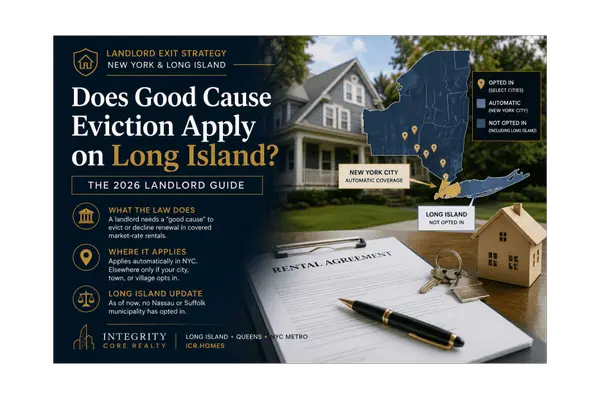
Good Cause Eviction protections, which limit a landlord's ability to remove a tenant or decline to renew a lease without a legally recognized reason, were once primarily a New York City concern. That is no longer true. Nassau County municipalities and communities across Long Island have adopted or are actively considering local Good Cause ordinances, extending protections that fundamentally change what landlords can and cannot do at lease end.
For landlords who built their business model around flexibility, re-renting at market rate between tenancies, making strategic use decisions at lease expiration, or simply having the option to exit gracefully, Good Cause Eviction represents a meaningful reduction in options. And every reduction in options increases the stakes of a difficult tenant situation turning into a long-term legal entanglement.
"One apartment out of eight not paying rent wipes out any profit. Judges talk in terms of months. They don't talk about what $300,000 actually does to a family."
The 5 Warning Signs Every New York Landlord Should Know
Most landlord-tenant problems don't announce themselves as decade-long nightmares. They start small, a payment a few days late, a minor dispute about a lease clause, a maintenance complaint that seems slightly escalated. Here are the warning signs that a situation may be developing into something that requires immediate legal attention.
Non-Payment Paired With Legal Claims
A tenant who stops paying rent and simultaneously raises legal claims, about stabilization status, lease validity, or habitability, is not the same as a tenant who simply can't afford rent. The legal framing signals a strategy, not a hardship. Get a landlord-tenant attorney involved immediately.
A Housing Court Attorney Appears
The moment a tenant retains a housing court attorney, particularly a tenant advocacy organization, the rules of the engagement change completely. What felt like a routine situation now has a legal strategist on the other side. You need one too.
Questions About Rent Stabilization Status
If a tenant, or their attorney, begins questioning whether your unit was properly deregulated or whether it should be subject to rent stabilization, treat this as a red flag requiring immediate legal review of your records, regardless of how certain you are that you followed proper procedures.
Repeated Attorney Changes
In the Brooklyn case, the tenant changed attorneys at least eight times. Each change can reset timelines, require new briefing, and justify additional adjournments. This is a recognizable pattern in cases where delay itself is the strategy.
Housing Code Violations Suddenly Appear
A rash of housing code inspection complaints and violations filed concurrently with a tenancy dispute is a common litigation tactic. These violations require response, can delay proceedings, and increase carrying costs, all while your ability to collect rent or regain possession is suspended.
What This Means for Queens and Long Island Landlords Specifically
The Brooklyn case unfolded in a rent-stabilized building in the five boroughs. But the lessons apply far beyond Brooklyn's borders, and the legal environment outside the city is shifting in ways that make this conversation urgently relevant for Queens and Long Island rental owners.
Queens
Queens landlords are already fully within New York City's housing court jurisdiction, rent stabilization framework, and Good Cause Eviction protections. For Queens rental property owners, the Brooklyn case is not a distant cautionary tale, it's a local one. The same courts, the same laws, and the same legal dynamics that produced a decade-long dispute in Park Slope are at work in Flushing, Jamaica, Astoria, and Forest Hills.
Queens has also seen substantial home value appreciation over the past five years, creating real exit opportunities for landlords who have been contemplating their options. The financial case for holding a Queens rental, particularly one with tenant complications, has weakened considerably as equity positions have grown.
Long Island
Nassau County landlords are not operating under New York City's housing courts, but the legal landscape is converging. Good Cause Eviction protections are spreading municipality by municipality across the Island. Tenant advocacy resources are increasingly accessible outside the city. And Long Island's housing court, while generally less backlogged than NYC housing court, is still a forum where contested tenancy disputes can consume years and tens of thousands of dollars in legal fees.
For Long Island landlords, the critical question is not whether your current situation resembles the Brooklyn case. It's whether you have thought carefully about what your options are if it ever did, and whether the equity you've built over five years of record appreciation is working as hard for you as it could be.
Your Options: What to Consider Before You're in Court
The best time to evaluate your landlord exit options is before you need them. Here's what Long Island, Queens, and Brooklyn-area landlords are considering right now.
"They tell you to sell your building, to accept a buyout, to pay the person who owes you hundreds of thousands of dollars. That's not justice.", Thomas Diana, Brooklyn landlord
No landlord should be forced into that position. But the path away from it starts long before the situation reaches that point, with a clear understanding of the legal environment, a realistic assessment of your property's value, and a strategy that puts your equity to work rather than leaving it hostage to a court calendar.
Frequently Asked Questions
How long does an eviction take in New York?
Even a straightforward non-payment eviction in New York can take 6 to 12 months. Contested cases involving rent stabilization disputes, court backlogs, or multiple attorney changes can stretch into years or longer. New York's housing courts are among the most tenant-protective in the country, and procedural delays can extend timelines dramatically beyond what most landlords expect.
Does New York's Good Cause Eviction law apply on Long Island?
Good Cause Eviction protections have expanded significantly and many Long Island municipalities have adopted or are considering local ordinances. Under this framework, landlords in covered areas cannot remove a tenant or decline to renew a lease without a legally recognized reason. This is a significant shift from the broader landlord authority that existed just a few years ago and affects how rental properties can be managed and eventually sold.
What are the warning signs that a landlord-tenant situation could become a serious legal problem in New York?
Key warning signs include: a tenant who stops paying rent while simultaneously raising legal claims; tenants who retain housing court attorneys; disputes about rent stabilization status; tenants making claims about lease history that contradict your records; and a sudden rash of housing code violation complaints. Any of these signals warrants an immediate consultation with a New York landlord-tenant attorney.
Can a New York landlord sell a rental property with a difficult tenant in place?
Yes, selling the property with the tenant in place to an investor buyer is often one of the most practical paths forward. The tenant's lease must be honored by the new buyer, but you are not required to resolve the tenancy before selling. An investor-focused sale removes the property from your balance sheet and stops the ongoing financial exposure. An experienced agent who understands investor sales can help you position the property correctly.
What options does a Long Island landlord have if they want to exit a rental property?
Long Island landlords have several exit paths: selling with the tenant in place to an investor buyer; negotiating a cash-for-keys agreement for a voluntary tenant exit; doing a 1031 exchange to defer capital gains taxes; or selling to the general market if the property is vacant. Given Long Island's 50%+ home value appreciation over the past five years, many landlords are sitting on substantial equity, and the financial case for exiting has rarely been stronger.
Integrity Core Realty, Landlord Exit Specialist
Don't Wait Until You're in Court to Understand Your Options
We work with landlords across, Bklyn, Queens, Nassau, and Suffolk County, and the broader NYC metro to evaluate exit strategies, understand current market value, and make informed decisions, before situations become expensive ones.
How Integrity Core Realty Can Help You
Legal Disclaimer: This article is for general informational purposes only and does not constitute legal advice. The Brooklyn landlord-tenant case referenced is sourced from Fox News reporting published June 2026. New York landlord-tenant laws, rent stabilization regulations, and Good Cause Eviction protections vary by municipality and change frequently. Always consult a licensed New York landlord-tenant attorney before making decisions about your rental property. The characterization of the Brooklyn case reflects publicly reported information and does not represent a legal determination of the merits of either party's position.
Categories
- All Blogs (64)
- Affordability (3)
- Buying Tips (9)
- Divorce & Real Estate (7)
- Downsizing & Senior Moves (3)
- Equity (3)
- Expired/Withdrawn/Canceled (1)
- Fairhaven Real Estate Stories (3)
- First-Time Buyers (9)
- For Buyers (33)
- For Sellers (21)
- Forecasts (3)
- Home Prices (3)
- Infographics (1)
- Mortgage Rates (2)
- NY/LI Landlord Resources (8)
- Pre-Foreclosure Options (2)
- Probate & Estate Home Sales (5)
- Rent vs. Buy (3)
- ⚖️ For Attorneys (4)
- 🏡 Featured Listings (21)
- 📍 Local Living (24)
- 📅 Open Houses & Events (4)
- 📊 Real Estate Insights (7)
Recent Posts